


Why Endurance Athletes Talk About Antioxidants at All
Hard, sustained exercise produces a byproduct most athletes never think about: free radicals, unstable molecules generated in higher amounts during intense or prolonged activity. In small, normal amounts, this is a completely healthy part of how the body adapts to training: some oxidative stress actually signals the body to build more resilience over time. But during periods of very heavy training volume, or when recovery is already compromised by poor sleep or not eating enough, higher free radical production can outpace the body's natural antioxidant defenses, contributing to increased fatigue and slower recovery between hard sessions.
What Antioxidants Actually Do
Antioxidants are compounds that help neutralize free radicals, and they come from a wide range of sources: vitamin C, vitamin E, beta carotene, and a large family of plant compounds called polyphenols, found in colorful fruits and vegetables. The body also produces its own antioxidant enzymes, and a well rounded diet supports both systems working together rather than relying entirely on outside sources. This is a case where more is not automatically better. Some research on very high dose antioxidant supplementation around intense training has actually suggested it may blunt some of the beneficial training adaptations that come from a normal amount of oxidative stress caused by exercise, which is part of why a food first, moderate approach tends to be favored over megadosing isolated antioxidant supplements.
Color Is a Genuinely Useful Shortcut
One of the simplest pieces of nutrition advice, and one that is most backed by research, is also one of the least followed: eat a wide range of colors from fruits and vegetables. Different colors generally correspond to different antioxidant compounds: reds and purples (berries, cherries, grapes, beets) are rich in anthocyanins, oranges and yellows (citrus, carrots, sweet potatoes) bring carotenoids, and greens (leafy vegetables, broccoli) contribute their own distinct set of protective compounds. An athlete eating mostly beige, processed foods, even if the calorie and macro numbers technically add up, is likely missing a meaningful portion of this broader nutritional picture. A practical way to check this without tracking anything: look at a dinner plate and count the distinct colors on it. Two or three different colors most nights is a reasonable target that doesn't require any special shopping list or meal plan.
Tart Cherry and Beetroot: What the Research Actually Shows
Two specific foods come up often in endurance nutrition research: tart cherry (rich in anthocyanins) and beetroot (rich in nitrates, which support blood flow). Several studies on tart cherry juice or concentrate around endurance events have shown modest reductions in reported muscle soreness and faster perceived recovery, while beetroot's nitrate content has research support for modestly improving oxygen efficiency during sustained effort. Neither is a guaranteed performance transformation for every athlete, since individual response varies meaningfully, but both represent some of the more consistently studied options based on food in this space, more so than many antioxidant supplements sold on the strength of marketing rather than research.
Building a Plate Rich in Antioxidants Without Overthinking It
-
Aim for at least three different colors of fruit or vegetable across meals each day.
-
Include berries or cherries a few times a week, fresh or frozen.
-
Don't fear cooked vegetables: some antioxidants are actually more available after cooking, others less, so a mix of raw and cooked covers more ground.
-
Treat foods rich in antioxidants as a daily habit, not something to load up on only the day before a big event.
-
Avoid stacking multiple antioxidant supplements at high doses around hard training blocks without guidance, since more isn't automatically better here.
Timing Around Competition
For endurance events specifically, some athletes use tart cherry or beetroot products in the days leading into a race based on the research timelines used in most studies: often several days of consistent intake beforehand rather than a single dose the morning of. This is a case where consistency over a week or two tends to matter more than anything done the night before competition, which is a pattern that shows up across most of sports nutrition: the boring, repeated daily habit outperforms the addition made at the last minute almost every time.
A Note on Younger Athletes
For younger athletes who are still developing, the antioxidant conversation should stay entirely food based: a colorful, varied diet, without any need for concentrated antioxidant supplements. The research discussed above around tart cherry, beetroot, and structured antioxidant timing is generally studied in and relevant to older teen and adult endurance athletes training and competing at a higher volume, not younger athletes whose nutritional needs are better met through variety and adequate calories from whole foods.
Antioxidants and Inflammation After Hard Training
Inflammation is the other piece of this picture worth mentioning briefly. A certain amount of inflammation after hard training is a normal, healthy part of the repair process: it's part of what signals the body to adapt and get stronger. Chronic, unresolved inflammation from consistently poor sleep, not eating enough, or nonstop high intensity training without adequate recovery is a different story, and that's where a diet rich in antioxidants and polyphenols, alongside the recovery fundamentals covered elsewhere in this series, plays a supporting role, not as a fix for a training and recovery plan that's fundamentally out of balance.
Where Reds and Purples Fits In
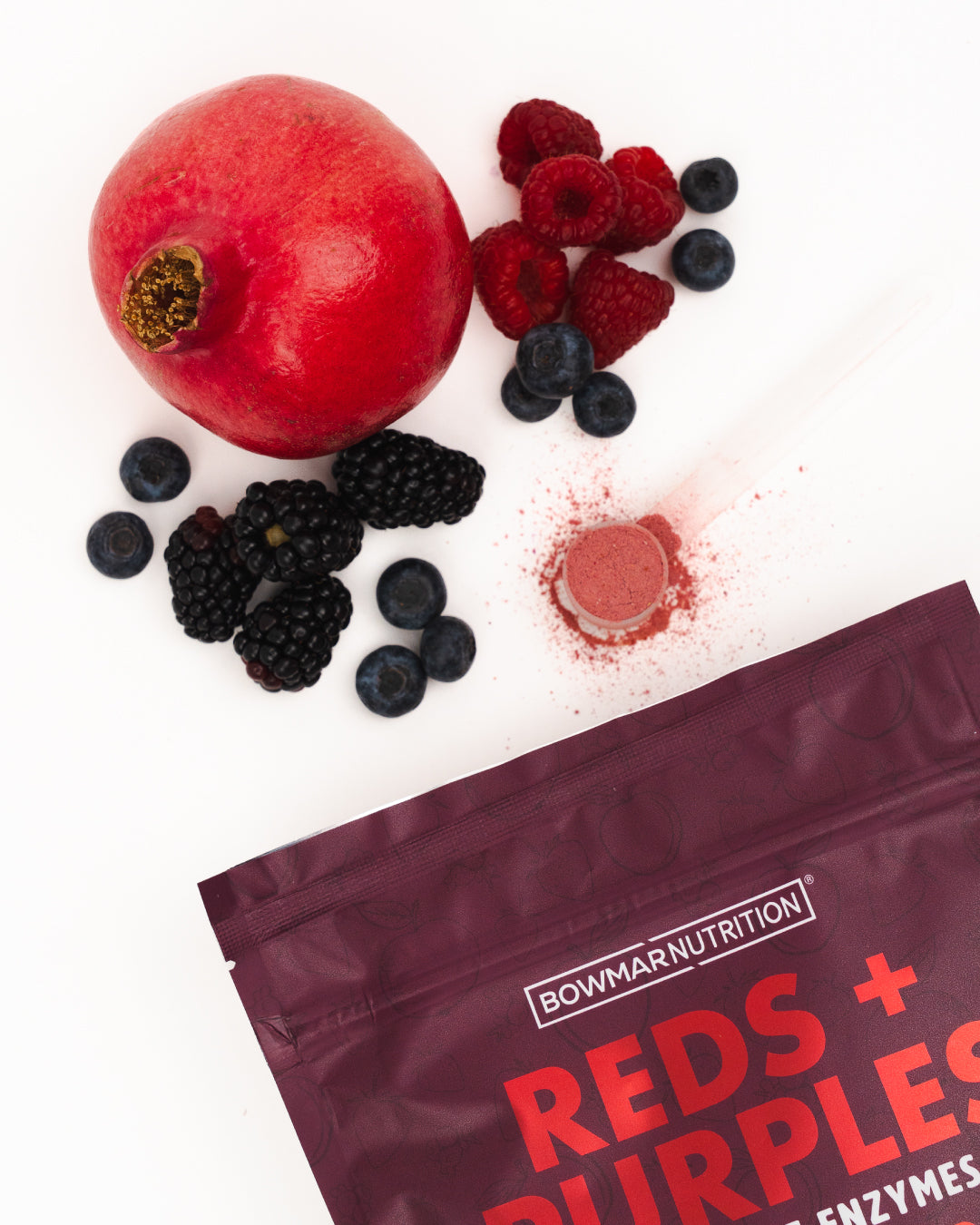
For older teen and adult athletes looking for a convenient way to add a broader range of fruit sources rich in antioxidants to their daily routine, Bowmar Reds and Purples ($69.99) is a superfood blend built from 16 different organic fruit sources along with added digestive enzymes, designed to be mixed into water as an easy daily habit rather than something used only on race day. It works best as a complement to a genuinely varied, colorful diet, not a substitute for eating actual fruits and vegetables across the week.
Very high doses of isolated antioxidant supplements around intense training may blunt some beneficial training adaptations. A food first, moderate approach is generally favored. Younger athletes should focus on whole food variety rather than concentrated supplements. These statements have not been evaluated by the Food and Drug Administration. This product is not intended to diagnose, treat, cure, or prevent any disease.
Frequently Asked Questions
Do antioxidant supplements actually improve athletic performance?
The evidence is mixed and food source matters. Antioxidants from whole foods as part of a varied, colorful diet support normal recovery, while isolated antioxidant supplements at very high doses around intense training have, in some research, appeared to blunt beneficial training adaptations. A food first, moderate approach is generally the strategy with the most support.
What foods are highest in antioxidants for athletes?
Berries, cherries, grapes, and beets (reds and purples) are rich in anthocyanins; citrus, carrots, and sweet potatoes provide carotenoids; and leafy greens contribute their own set of protective compounds. Eating a wide range of colors across the week is one of the simplest ways to cover this ground.
Does tart cherry juice actually help with muscle soreness?
Several studies suggest modest reductions in reported soreness and faster perceived recovery with consistent tart cherry intake around endurance events, though individual response varies. It's one of the more consistently researched recovery aids based on food in endurance sports nutrition.
Is a superfood blend like Reds and Purples appropriate for a younger athlete?
It's formulated with the older teen and adult athlete in mind. Younger athletes who are still developing are better served by a colorful, varied diet of whole foods rather than a concentrated fruit supplement, which is a good option to introduce later as training volume increases.
When should an athlete start taking foods or supplements rich in antioxidants before a race?
Research on foods like tart cherry and beetroot generally uses several days of consistent intake leading into an event, rather than a single dose the morning of. Building foods rich in antioxidants into a daily habit tends to matter more than anything done at the last minute.
Share:
Gut Health and Performance: Why Digestion Matters for Athletes
Recovery Week: How Top Athletes Bounce Back Between Competitions