

How to Count Macros

How to Count Macros

Counting macros can sound complicated at first, but it is really just a way to understand where your calories come from. Instead of only tracking total calories, macro tracking breaks your food into three categories: protein, carbohydrates, and fat.

If your goal is to build muscle, lose body fat, improve performance, or simply eat with more structure, learning how to count macros can give you a clearer plan. The key is not perfection. The key is understanding the basics, setting realistic targets, and staying consistent long enough to see what works for your body.

What are macros?

Macros, short for macronutrients, are nutrients your body uses in larger amounts. The three main macros are protein, carbohydrates, and fat.

  •  Protein: Supports muscle repair, recovery, and lean mass. Research published in the Journal of the International Society of Sports Nutrition shows that people who exercise regularly need more protein than sedentary individuals to support training adaptations.
  • Carbohydrates: Provide energy for daily activity, workouts, and recovery.
  • Fat: Supports normal hormone function, helps absorb fat-soluble vitamins, and contributes to fullness.

Every food contains one or more macros. Chicken breast is mostly protein. Rice is mostly carbohydrates. Avocado is mostly fat. A meal like a protein smoothie with fruit may contain all three.

Why count macros instead of only calories?

Calories determine the total energy you eat, but macros help explain the quality and structure of those calories. For example, 2,000 calories can look very different depending on how much protein, carbohydrates, and fat are included.

Macro tracking can help you:

  • Eat enough protein to support training and recovery.
  • Keep meals more balanced throughout the day.
  • Understand why some meals keep you full longer.
  • Adjust your nutrition without guessing.
  • Build a plan around your goals instead of following random food rules.

For beginners, macros are useful because they make nutrition more measurable. You do not need to label foods as “good” or “bad.” You simply learn how different foods fit into your day.

How to calculate your macros

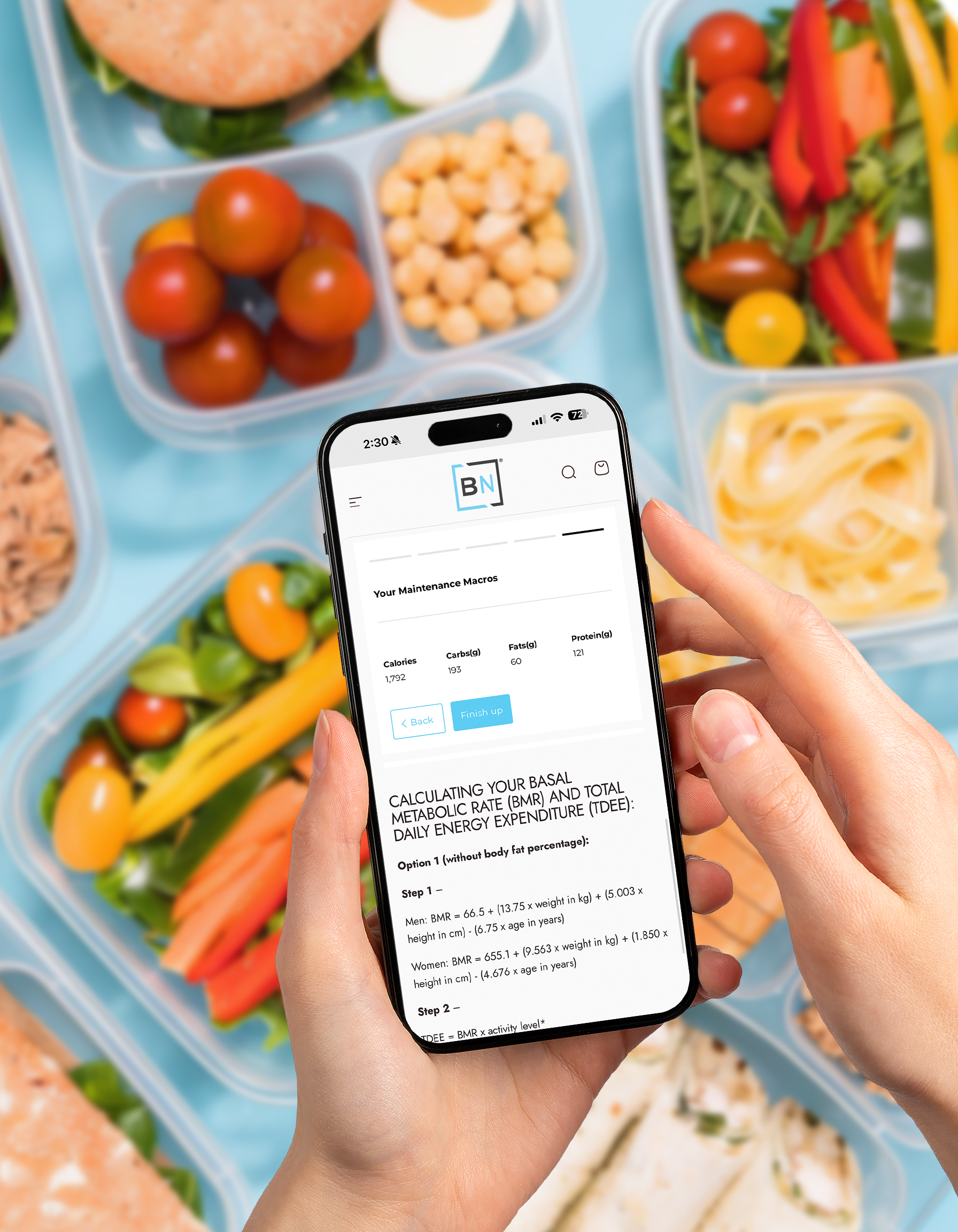
The easiest starting point is Bowmar’s free macro calculator. It is a calorie and macro calculator that walks you through two ways to estimate your numbers, so you are not just guessing.

Here is how to use it:

  1. Choose the option that matches what you know about your body. Option 1 only needs your sex, weight, height, and age, which makes it the simplest starting point. Option 2 asks for your body fat percentage instead, which can give a more precise result if you know it or are willing to estimate it with a skin fold test or body fat caliper.
  2. Select your activity level. Both options ask you to pick an activity level, from sedentary to extremely active. This is used to calculate your Total Daily Energy Expenditure (TDEE), the estimated number of calories your body burns in a day.
  3. Adjust your TDEE for your goal. Your TDEE becomes your starting calorie target once you decide on a goal:
    • Cutting: Use it as a macro calorie deficit calculator by subtracting 10-25% from your TDEE. Start with a 10% deficit and reassess after two weeks.
    • Bulking: Add 10-25% to your TDEE. Start with a 10% increase and reassess after two weeks.
    • Maintaining: Keep your calories at your TDEE.

4.        Set your protein target first, then split the rest. Once your calorie target is set, prioritize protein, then divide your remaining calories between carbohydrates and fats based on your preferences and training style.

Your first set of macros is not a lifetime rule. It is a starting point. The calculator gives you an estimate, not an exact number, so if your weight, energy, training, digestion, or hunger changes, revisit the calculator and adjust your macros too.

How much protein do beginners need?

Protein needs vary by person, but active adults generally need more protein than sedentary adults. Research on protein supplementation and resistance training, published in the British Journal of Sports Medicine, has found that protein intake can support strength and lean mass gains when combined with training.

For beginners, the most practical approach is to include a protein source at each meal. That might be eggs at breakfast, chicken at lunch, Greek yogurt as a snack, or a protein shake after training.

Bowmar Whey Protein can be a convenient option when you need a simple way to add protein without cooking another full meal. It is especially useful for busy mornings, post-workout routines, or high-protein snacks.

What foods should you track?

At the beginning, track everything you eat and drink for a short period so you can understand your habits. This includes oils, sauces, coffee creamers, snacks, and bites while cooking.

Beginner-friendly macro foods include:

  • Protein: Chicken, turkey, eggs, lean beef, Greek yogurt, cottage cheese, tuna, protein powder.
  • Carbs: Rice, potatoes, oats, fruit, vegetables, tortillas, bread, pasta.
  • Fats: Avocado, olive oil, nut butter, nuts, seeds, whole eggs.
  • Fiber foods: Vegetables, berries, beans, oats, and a fiber supplement like Bowmar Fiber when needed.

If tracking everything feels overwhelming, start with protein and total calories first. Once that becomes easier, add carbohydrates and fats.

Common macro-counting mistakes

The biggest mistake beginners make is trying to be perfect right away. Macro tracking works best when it is repeatable.

Avoid these beginner mistakes:

  • Changing targets too often: Give your plan time before making adjustments.
  • Ignoring serving sizes: Weighing or measuring food teaches accuracy.
  • Skipping protein early in the day: This can make it harder to hit your target later.
  • Not tracking oils or sauces: These can add up quickly.
  • Treating macros as all-or-nothing: One off-plan meal does not ruin your progress.

Macro tracking should create clarity, not stress. If it becomes too rigid, simplify your approach.

A simple beginner day of macros

Here is what a simple macro-friendly day could look like:

  • Breakfast: Eggs, oats, and berries.
  • Lunch: Chicken, rice, vegetables, and avocado.
  • Snack: Bowmar Whey Protein blended with fruit.
  • Dinner: Lean beef or turkey, potatoes, and a salad.
  • Optional support: Bowmar Fiber if you struggle to stay regular or hit your daily fiber goal.

This is not a required plan. It is an example of how to build meals around protein, carbs, fats, and fiber.

FAQ

Do I have to count macros forever?

No. Many people count macros for a season to learn portion sizes, food balance, and consistency. Over time, you may be able to maintain your results with a more intuitive approach.

Is a macro calculator accurate?

A macro calculator gives you an estimate, not a guarantee. Use it as a starting point, then adjust based on progress, hunger, energy, and consistency.

Can I count macros if I eat out?

Yes. Use restaurant nutrition info when available, estimate portions when needed, and focus on consistency over perfection.

What is the easiest macro to start tracking?

Protein is usually the best place to start because it supports fullness, muscle repair, and recovery. Once protein feels consistent, add calories, carbs, and fats.


Ready to build your starting plan? Use the Bowmar Macro Calculator, then make hitting your protein goal easier with Bowmar Whey Protein.

Counting macros can sound complicated at first, but it is really just a way to understand where your calories come from. Instead of only tracking total calories, macro tracking breaks your food into three categories: protein, carbohydrates, and fat.

If your goal is to build muscle, lose body fat, improve performance, or simply eat with more structure, learning how to count macros can give you a clearer plan. The key is not perfection. The key is understanding the basics, setting realistic targets, and staying consistent long enough to see what works for your body.

What are macros?

Macros, short for macronutrients, are nutrients your body uses in larger amounts. The three main macros are protein, carbohydrates, and fat.

  •  Protein: Supports muscle repair, recovery, and lean mass. Research published in the Journal of the International Society of Sports Nutrition shows that people who exercise regularly need more protein than sedentary individuals to support training adaptations.
  • Carbohydrates: Provide energy for daily activity, workouts, and recovery.
  • Fat: Supports normal hormone function, helps absorb fat-soluble vitamins, and contributes to fullness.

Every food contains one or more macros. Chicken breast is mostly protein. Rice is mostly carbohydrates. Avocado is mostly fat. A meal like a protein smoothie with fruit may contain all three.

Why count macros instead of only calories?

Calories determine the total energy you eat, but macros help explain the quality and structure of those calories. For example, 2,000 calories can look very different depending on how much protein, carbohydrates, and fat are included.

Macro tracking can help you:

  • Eat enough protein to support training and recovery.
  • Keep meals more balanced throughout the day.
  • Understand why some meals keep you full longer.
  • Adjust your nutrition without guessing.
  • Build a plan around your goals instead of following random food rules.

For beginners, macros are useful because they make nutrition more measurable. You do not need to label foods as “good” or “bad.” You simply learn how different foods fit into your day.

How to calculate your macros

The easiest starting point is Bowmar’s free macro calculator. It is a calorie and macro calculator that walks you through two ways to estimate your numbers, so you are not just guessing.

Here is how to use it:

  1. Choose the option that matches what you know about your body. Option 1 only needs your sex, weight, height, and age, which makes it the simplest starting point. Option 2 asks for your body fat percentage instead, which can give a more precise result if you know it or are willing to estimate it with a skin fold test or body fat caliper.
  2. Select your activity level. Both options ask you to pick an activity level, from sedentary to extremely active. This is used to calculate your Total Daily Energy Expenditure (TDEE), the estimated number of calories your body burns in a day.
  3. Adjust your TDEE for your goal. Your TDEE becomes your starting calorie target once you decide on a goal:
    • Cutting: Use it as a macro calorie deficit calculator by subtracting 10-25% from your TDEE. Start with a 10% deficit and reassess after two weeks.
    • Bulking: Add 10-25% to your TDEE. Start with a 10% increase and reassess after two weeks.
    • Maintaining: Keep your calories at your TDEE.

4.        Set your protein target first, then split the rest. Once your calorie target is set, prioritize protein, then divide your remaining calories between carbohydrates and fats based on your preferences and training style.

Your first set of macros is not a lifetime rule. It is a starting point. The calculator gives you an estimate, not an exact number, so if your weight, energy, training, digestion, or hunger changes, revisit the calculator and adjust your macros too.

How much protein do beginners need?

Protein needs vary by person, but active adults generally need more protein than sedentary adults. Research on protein supplementation and resistance training, published in the British Journal of Sports Medicine, has found that protein intake can support strength and lean mass gains when combined with training.

For beginners, the most practical approach is to include a protein source at each meal. That might be eggs at breakfast, chicken at lunch, Greek yogurt as a snack, or a protein shake after training.

Bowmar Whey Protein can be a convenient option when you need a simple way to add protein without cooking another full meal. It is especially useful for busy mornings, post-workout routines, or high-protein snacks.

What foods should you track?

At the beginning, track everything you eat and drink for a short period so you can understand your habits. This includes oils, sauces, coffee creamers, snacks, and bites while cooking.

Beginner-friendly macro foods include:

  • Protein: Chicken, turkey, eggs, lean beef, Greek yogurt, cottage cheese, tuna, protein powder.
  • Carbs: Rice, potatoes, oats, fruit, vegetables, tortillas, bread, pasta.
  • Fats: Avocado, olive oil, nut butter, nuts, seeds, whole eggs.
  • Fiber foods: Vegetables, berries, beans, oats, and a fiber supplement like Bowmar Fiber when needed.

If tracking everything feels overwhelming, start with protein and total calories first. Once that becomes easier, add carbohydrates and fats.

Common macro-counting mistakes

The biggest mistake beginners make is trying to be perfect right away. Macro tracking works best when it is repeatable.

Avoid these beginner mistakes:

  • Changing targets too often: Give your plan time before making adjustments.
  • Ignoring serving sizes: Weighing or measuring food teaches accuracy.
  • Skipping protein early in the day: This can make it harder to hit your target later.
  • Not tracking oils or sauces: These can add up quickly.
  • Treating macros as all-or-nothing: One off-plan meal does not ruin your progress.

Macro tracking should create clarity, not stress. If it becomes too rigid, simplify your approach.

A simple beginner day of macros

Here is what a simple macro-friendly day could look like:

  • Breakfast: Eggs, oats, and berries.
  • Lunch: Chicken, rice, vegetables, and avocado.
  • Snack: Bowmar Whey Protein blended with fruit.
  • Dinner: Lean beef or turkey, potatoes, and a salad.
  • Optional support: Bowmar Fiber if you struggle to stay regular or hit your daily fiber goal.

This is not a required plan. It is an example of how to build meals around protein, carbs, fats, and fiber.

FAQ

Do I have to count macros forever?

No. Many people count macros for a season to learn portion sizes, food balance, and consistency. Over time, you may be able to maintain your results with a more intuitive approach.

Is a macro calculator accurate?

A macro calculator gives you an estimate, not a guarantee. Use it as a starting point, then adjust based on progress, hunger, energy, and consistency.

Can I count macros if I eat out?

Yes. Use restaurant nutrition info when available, estimate portions when needed, and focus on consistency over perfection.

What is the easiest macro to start tracking?

Protein is usually the best place to start because it supports fullness, muscle repair, and recovery. Once protein feels consistent, add calories, carbs, and fats.


Ready to build your starting plan? Use the Bowmar Macro Calculator, then make hitting your protein goal easier with Bowmar Whey Protein.