


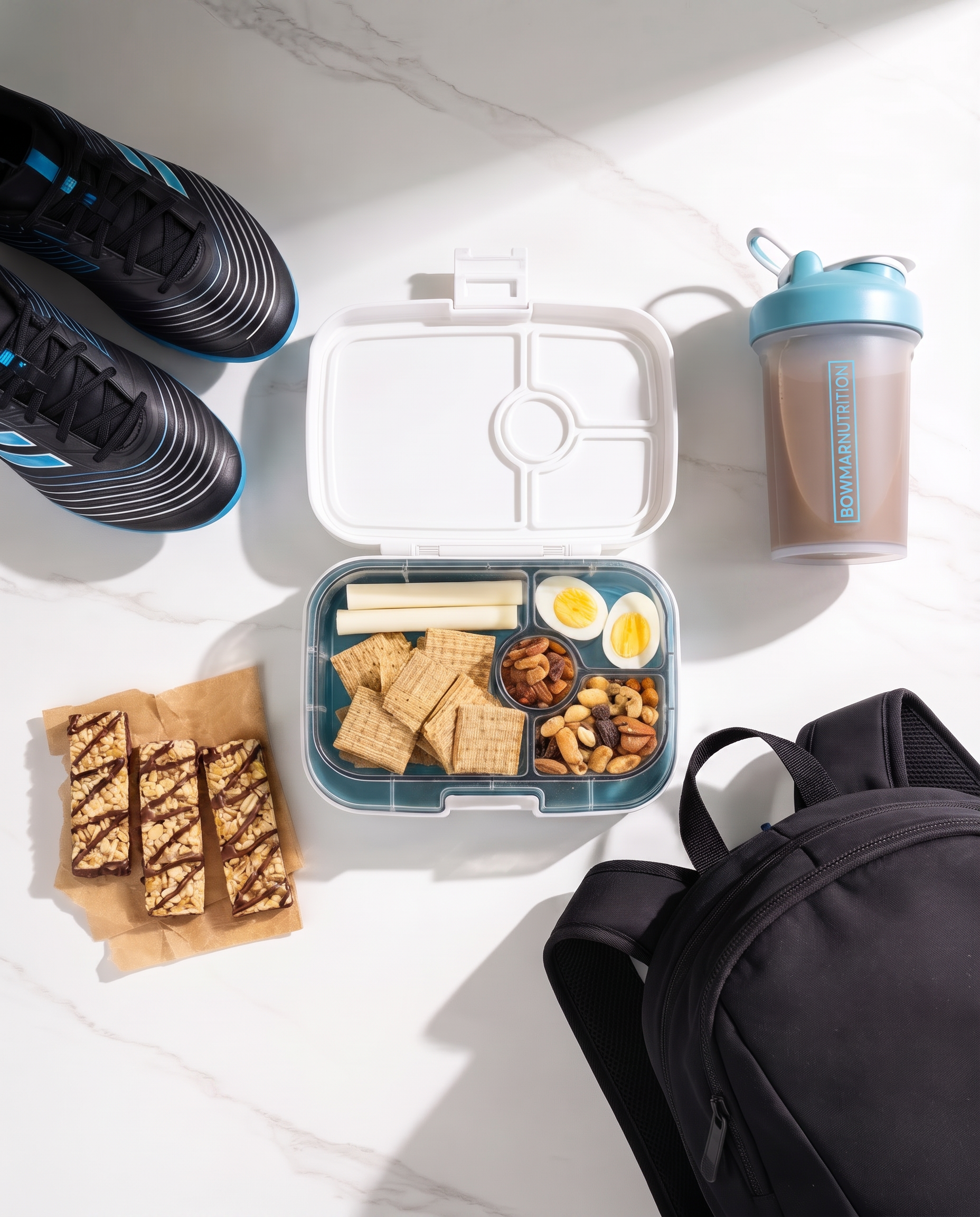
The Lunchbox Is Doing More Work Than It Gets Credit For
For a student athlete, lunch is rarely the last meal before the school day ends. There is usually a snack before practice, sometimes one during a long tournament day, and often another on the ride home. That means the food packed in the morning has to cover more ground than a typical school lunch. It needs to hold a student through afternoon classes and then power a practice or game a few hours later, all without refrigeration, a microwave, or much time to eat it.
Most default lunchbox snacks are not built for that job. Chips, fruit snacks, and granola bars are mostly refined carbohydrates, which burn off fast and can leave an athlete running on empty by the third quarter or the second event of a meet. The fix is not complicated: build the lunchbox around a protein source first, then fill in with carbohydrates and produce around it.
What Makes a Snack Actually Performance Ready
A good snack to eat before practice or between classes generally checks three boxes for a student athlete: it has some protein to keep energy steady, it does not need to be refrigerated or heated, and it is easy to eat quickly between classes or in a locker room. Snacks heavy in fat and fiber right before activity can sit uncomfortably during hard exercise, so timing matters as much as the snack itself: a heavier option that digests more slowly is fine after school with a couple of hours before practice, while something lighter works better in the 30 to 60 minutes right before activity starts. Texture and portability matter too: a snack that needs a spoon, a napkin, and two free hands is a snack that gets skipped when a student has four minutes between classes. The best lunchbox additions can be eaten or sipped quickly, without much cleanup.
Shelf Stable Protein Options for the Backpack
These are the snacks that survive being tossed in a backpack all day without spoiling, without needing a cold pack, and without turning into a mess by third period:
-
A single serving protein powder in a ziplock bag, shaken up with water or milk in a shaker bottle for a quick, portable protein hit.
-
String cheese, which does best with a small ice pack but holds up fine for a few hours.
-
A small bag of roasted edamame or chickpeas.
-
Trail mix built around nuts and seeds rather than mostly chocolate and dried fruit.
-
Single serving nut butter packets paired with whole grain crackers.
-
A hard boiled egg, if there is a cold pack in the bag.
Protein powder is worth calling out specifically because it solves the two hardest constraints at once: zero refrigeration and almost no time investment. A student can pack a scoop or a single serving packet, add water or milk from a fountain or cafeteria, shake it up, and drink it walking between classes or waiting for a bus. Bowmar Whey Protein delivers 22 grams of protein per serving in a low fat, low carb formula that is low in lactose, so it mixes easily without the bloating some kids get from other powders, and it comes in flavors like Strawberry Milkshake, Vanilla Bean, Hot Chocolate, and Cookies and Cream, so a student who gets tired of the same snack every day has options that keep the habit going instead of fading out after the first week of school.
Timing Snacks Around Tournament and Two Practice Days
Tournament days, days with two practices, and consecutive games change the math. On a day with multiple practices or matches, an athlete is not eating three meals; they are eating five or six smaller ones, spaced around activity. A workable pattern looks like this: a real breakfast, a mid morning protein snack, lunch, a small snack 30 to 60 minutes before the second session, and a fuller recovery snack or meal within about 45 minutes after the last whistle. Packing two or three shelf stable protein snacks, or a couple of spare protein powder packets and a shaker bottle, instead of one is the difference between an athlete who has energy for the second half of a long day and one who is running on fumes by 3 p.m. It also helps to pack slightly more than seems necessary on tournament days or days with two practices. A spare protein packet or granola bar sitting unused in the bottom of a bag costs nothing, but running out of fuel by the third match of the day can turn what should be a strong performance into a sluggish one.
Snacks Before Practice vs. Snacks After Practice
Before practice, lighter is better: a small protein shake with a piece of fruit, or a small handful of pretzels, digests quickly and won't cause the heavy, sluggish feeling that a big snack can bring into a sprint set. After practice, the goal shifts: this is the window to combine protein and carbohydrate for recovery, so a heartier option (a sandwich, a fuller protein shake with a banana, or crackers and cheese alongside a shake) fits better once the workout is over and there's a little more time to eat.
A Week of Lunchbox Additions
Rotating a handful of dependable snacks keeps a student from getting bored and reaching for the vending machine instead. A simple weekly rotation might include: Monday, a protein shake and an apple; Tuesday, string cheese and whole grain crackers; Wednesday, a small trail mix with nuts and dried fruit; Thursday, a protein shake and a granola bar for a long practice day; Friday, edamame and orange slices before a Friday night game. None of these require prep beyond tossing a shaker bottle or a bag in a backpack, which matters on a week where mornings are already tight.
What to Check on the Label
Not all packaged protein snacks are created equal, and it is worth a quick label check before stocking up. Look at grams of protein per serving relative to calories, and check the ingredient list on any protein powder for added sugar and how it handles lactose, since that is what tends to cause stomach discomfort for kids who are sensitive to it. Sodium is the other number worth watching on packaged snacks generally, especially if a student is eating two or three of them in a single day. Ingredient lists that read like a short, recognizable list of real ingredients are generally a good sign compared to a long list of additives and fillers.
What About Vegetarian Athletes?
Not every student athlete eats meat, and the same logic of shelf stable snacks that need no refrigeration still applies for a vegetarian lunchbox. Protein powder is actually one of the easiest options here, since it requires no meat and mixes into a shake in seconds. Roasted chickpeas, edamame, nut and seed butter packets, protein fortified granola bars, and trail mixes built around nuts rather than mostly dried fruit round out the rest of a similar approach. Cheese and yogurt work too, with a small ice pack. The goal is the same regardless of what a family eats: pick snacks with real protein first, then round out the rest of the lunchbox around them.
Building a Simple Snack Station at Home
One of the easiest ways to keep lunchboxes stocked without a daily scramble is to set up a designated snack shelf or bin at home stocked with shelf stable, grab and go options: single serving protein powder packets and a clean shaker bottle, individual nut butter packets, small trail mix bags, granola bars. When packing lunch takes ten seconds because everything protein forward is already sorted into one spot, it is far more likely to happen every morning instead of only on the days there is extra time. Involving a student in restocking that bin on a weekend grocery trip, including picking out a protein powder flavor, also tends to increase the odds they actually eat and drink what gets packed, since they had a say in what went in the bag.
Where Whey Protein Fits In
Whole foods (fruit, cheese, nuts, sandwiches) should still make up most of a student athlete's lunchbox. But for the snack that has to survive a full school day without spoiling and still deliver real protein in seconds, Strawberry Milkshake Bowmar Whey Protein ($49.99) is built for exactly that gap. Each serving delivers 22 grams of protein in a low fat, low carb formula that is low in lactose to help avoid the indigestion or bloating some kids get from other powders, and it mixes easily with hot or cold liquid, whether that's water in a shaker bottle, milk, a smoothie, or even stirred into yogurt or oats. It comes in ten flavors, from Strawberry Milkshake and Vanilla Bean to Hot Chocolate and Smores, so a student has options instead of drinking the same shake every single day.
As with any packaged snack or protein powder, check the ingredient and allergen information against your child's individual dietary needs, and talk to your pediatrician or a registered dietitian if you have questions about the right amount of protein for your child's age and activity level. These statements have not been evaluated by the Food and Drug Administration. This product is not intended to diagnose, treat, cure, or prevent any disease.
Frequently Asked Questions
How much protein should a student athlete get from snacks during the day?
It varies by age, sport, and training volume, so there is no single number that fits every student. A pediatrician or sports dietitian can help set an individualized target. As a general guide, aiming for roughly 10 to 15 grams of protein per snack, spaced two to three times between meals on a heavy training day, is a reasonable starting point for many teen athletes.
What snacks don't need refrigeration for a full school day?
A protein powder packet mixed with water in a shaker bottle, trail mix, roasted chickpeas or edamame, and nut butter packets with crackers all hold up fine in a backpack without a cold pack. String cheese and hard boiled eggs are better options if a small ice pack is available.
Should my child eat right before practice?
A small snack that is easy to digest, eaten 30 to 60 minutes before practice, is usually fine and can help prevent an energy crash during activity. A large meal, or a meal high in fat, right before exercise can cause stomach discomfort, so save the bigger meal for after practice.
How do I keep my athlete from getting bored of the same snacks?
Rotate through four or five dependable options rather than packing the same thing daily, and let your student help pick flavors or try new ones. A protein shake in a new flavor, like Peach Cobbler or Hazelnut Coffee, or a different type of trail mix can keep the habit fresh through a long season.
Is protein powder a good snack for kids?
In reasonable servings, protein powder can be a convenient part of a balanced diet for active kids, especially when time is short. Bowmar Whey Protein, for example, packs 22 grams of protein into a single serving that is low in lactose to help avoid stomach discomfort. As with any supplement, check ingredients and serving size against your family's needs, and talk to your pediatrician if your child has any specific dietary restrictions or health conditions.
Share:
Back to School Breakfasts That Fuel Focus and Performance
Hydration for Two Practice Days: What Every Student Athlete's Water Bottle Needs