

Building Stronger Bones and Joints: Nutrition for Growing Athletes

Building Stronger Bones and Joints: Nutrition for Growing Athletes

Why Bones and Joints Need Extra Attention During the School Sports Years

Childhood and the teenage years are when the body builds most of the bone density it will carry for life. By some estimates, roughly 90 percent of peak bone mass is established by the late teens. That makes the school sports years, roughly ages 8 through 18, one of the most important windows for bone health of a person's entire life, not because anything is fragile or at risk in a scary way, but because it is genuinely the best opportunity to build a strong foundation through food, activity, and rest. Add in the physical demands of running, jumping, and cutting that come with most school sports, and joint health becomes part of the same conversation, since growing joints and connective tissue are also adapting to real training loads for the first time.

How Growing Bones Are Different From Adult Bones

Unlike adult bones, a child or teenager's bones still have open growth plates: areas of developing cartilage near the ends of long bones where new bone tissue forms as a child grows. This is normal and healthy, but it also means growing athletes are more susceptible to certain overuse injuries, like growth plate stress reactions, that an adult athlete with fully fused bones would not experience in the same way. This is one of several reasons why nutrition guidance, training loads, and recovery time for a still growing athlete should generally be more conservative than what would apply to a fully grown adult. Coaches and trainers who work with youth teams are often well aware of this distinction, which is part of why many youth sports programs now build in more structured rest and monitor training volume more closely than they might have a generation ago.

Food First Nutrition for Growing Bones

For any athlete under about 14, and really for younger teens generally, the foundation for bone health should be food, not supplements. Four nutrients matter most: calcium, vitamin D, protein, and simply enough total calories to support both growth and training. Calcium needs for growing kids and teens generally run higher than for adults: roughly 1,000 to 1,300 milligrams per day depending on age, though a pediatrician can help pin down an exact target for a specific child. Vitamin D helps the body actually use that calcium, and comes from sunlight exposure, fortified milk, and fatty fish, though many kids (especially those who spend a lot of time indoors or live in northern climates) fall short and may need a supplement guided by a pediatrician.

  • Calcium: dairy (milk, yogurt, cheese), fortified plant milks, leafy greens like kale and bok choy, and canned salmon with bones.

  • Vitamin D: sunlight exposure, fortified milk and cereal, egg yolks, and fatty fish like salmon.

  • Protein: lean meats, eggs, dairy, beans, and fish, spread across meals rather than loaded into just one.

  • Total calories: enough across the day to support both normal growth and the added energy demands of training. A growing athlete who is chronically under fueled can see slowed growth and higher injury risk.

Sunlight, Sleep, and Recovery Matter Just as Much as Food

Bone and connective tissue are not built during practice; they are built during rest, when the body repairs and strengthens what training has stressed. Teenagers generally need 8 to 10 hours of sleep per night, and a chronically under slept, over scheduled athlete is at higher risk for both overuse injuries and slower recovery from normal training soreness. Regular time outdoors also supports natural vitamin D production, which is one more reason a mix of outdoor and indoor training, when a sport allows it, has benefits beyond just the workout itself.

The Overuse and Early Specialization Problem

A significant share of bone and joint issues in young athletes trace back not to nutrition at all, but to overuse: playing one sport year round with little to no rest, or ramping up training volume too quickly. Growing bones and joints generally need more recovery time between hard efforts than adult bodies do, and pediatric sports medicine guidance increasingly recommends at least one to two days off from organized sports per week and periodic breaks from a single sport across the year. No amount of good nutrition fully offsets a training schedule with no rest built into it: food and recovery time work together, not as substitutes for each other.

Warning Signs Parents and Coaches Shouldn't Ignore

Growing pains that come and go, especially at night, are common and usually not a concern. What is worth a conversation with a doctor: pain that is localized to one specific spot and worsens with activity, swelling around a joint, pain that persists after rest, a limp, or any pain that affects performance for more than a few days. Injuries related to the growth plate in particular respond much better to early attention than to being pushed through, so when in doubt, a visit to a pediatrician or sports medicine doctor is the right call rather than waiting to see if it resolves on its own.

When Does Collagen Support Make Sense?

Collagen is a structural protein found throughout connective tissue, cartilage, and skin, and collagen peptide supplements have become popular among adult and older teen athletes as a way to support joint comfort and connective tissue alongside training. For a young, still growing athlete, though, the priority should stay food first: calcium, vitamin D, adequate protein and calories, sleep, and sensible training loads. Collagen supplementation is best considered for older teen (generally high school upperclassmen and beyond) and adult athletes, and even then, it works best as a complement to the food first fundamentals above, not a replacement for them.

A Simple Weekly Checklist for Families

A practical weekly target for a growing athlete's family to check against: dairy or a fortified alternative at two to three meals a day, a protein source at every meal, at least a little outdoor time most days, and one full rest day from organized training. None of this requires tracking grams or counting anything precisely: it is more useful as a rough weekly checklist than a strict daily rulebook, since kids' appetites and schedules vary day to day anyway.

Where Collagen Peptides Fits In

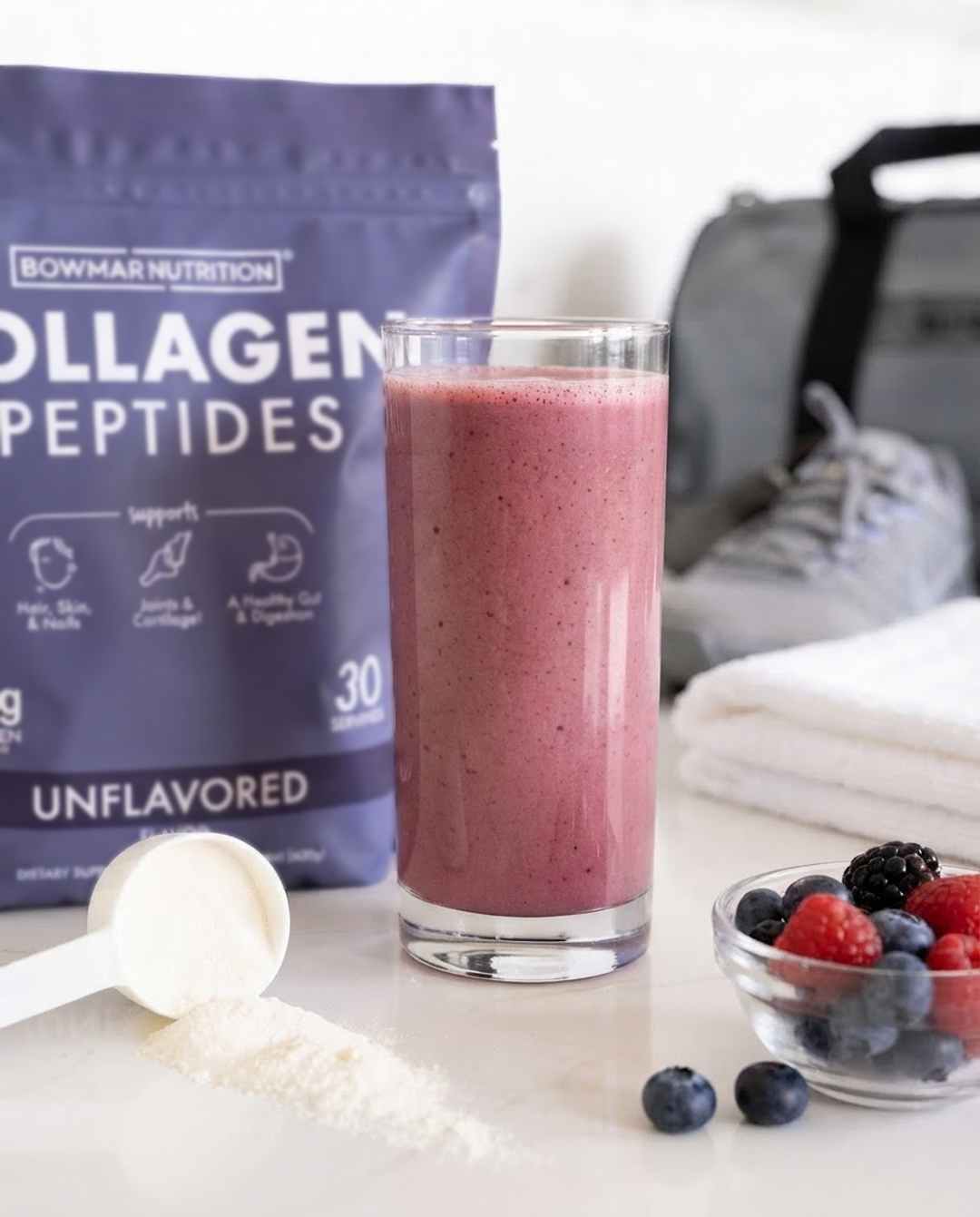
For older teen and adult athletes whose training and nutrition basics are already solid, Bowmar Collagen Peptides ($41.99) is an unflavored powder that dissolves easily into coffee, a smoothie, or a glass of water, making it simple to add on top of an existing routine without changing much else. It is not intended as a starting point for a younger athlete's bone and joint health: that foundation should always be built with food, sunlight, sleep, and appropriate training loads first, with any supplement decision made in conversation with a pediatrician or sports medicine provider.

Collagen and other joint support supplements are intended for older teens and adults. Any specific concerns about a growing athlete's bone or joint health, pain, or nutrition should be directed to a pediatrician or sports medicine physician. These statements have not been evaluated by the Food and Drug Administration. This product is not intended to diagnose, treat, cure, or prevent any disease.

Frequently Asked Questions

How much calcium does my young athlete need?

General guidance for children and teens runs roughly 1,000 to 1,300 milligrams per day depending on age, which is higher than the adult recommendation. A pediatrician can help set an exact target based on your child's age, diet, and any specific health considerations.

Is collagen safe for a middle schooler or young teen?

Collagen supplements are generally marketed toward and studied in older teens and adults. For a younger, still growing athlete, the priority should be food first nutrition (calcium, vitamin D, protein, and adequate calories) rather than a collagen supplement. Talk to a pediatrician before adding any supplement to a young athlete's routine.

What are the warning signs of a growth plate injury?

Pain localized to one specific spot that worsens with activity, swelling around a joint, a limp, or pain that persists after rest are all reasons to see a doctor. Growth plate injuries generally respond much better to early evaluation than to being played through.

How much rest does a young athlete actually need?

Pediatric sports medicine guidance generally recommends at least one to two days off from organized sports per week, plus periodic breaks from a single sport across the year, to reduce overuse injury risk in growing bones and joints.

At what age can an athlete start considering collagen or other joint support supplements?

There is no single universal age cutoff, but collagen supplementation is generally considered appropriate for older teens (roughly high school upperclassmen) and adults, and should always be discussed with a pediatrician or sports medicine provider first, especially for a competitive athlete.


Why Bones and Joints Need Extra Attention During the School Sports Years

Childhood and the teenage years are when the body builds most of the bone density it will carry for life. By some estimates, roughly 90 percent of peak bone mass is established by the late teens. That makes the school sports years, roughly ages 8 through 18, one of the most important windows for bone health of a person's entire life, not because anything is fragile or at risk in a scary way, but because it is genuinely the best opportunity to build a strong foundation through food, activity, and rest. Add in the physical demands of running, jumping, and cutting that come with most school sports, and joint health becomes part of the same conversation, since growing joints and connective tissue are also adapting to real training loads for the first time.

How Growing Bones Are Different From Adult Bones

Unlike adult bones, a child or teenager's bones still have open growth plates: areas of developing cartilage near the ends of long bones where new bone tissue forms as a child grows. This is normal and healthy, but it also means growing athletes are more susceptible to certain overuse injuries, like growth plate stress reactions, that an adult athlete with fully fused bones would not experience in the same way. This is one of several reasons why nutrition guidance, training loads, and recovery time for a still growing athlete should generally be more conservative than what would apply to a fully grown adult. Coaches and trainers who work with youth teams are often well aware of this distinction, which is part of why many youth sports programs now build in more structured rest and monitor training volume more closely than they might have a generation ago.

Food First Nutrition for Growing Bones

For any athlete under about 14, and really for younger teens generally, the foundation for bone health should be food, not supplements. Four nutrients matter most: calcium, vitamin D, protein, and simply enough total calories to support both growth and training. Calcium needs for growing kids and teens generally run higher than for adults: roughly 1,000 to 1,300 milligrams per day depending on age, though a pediatrician can help pin down an exact target for a specific child. Vitamin D helps the body actually use that calcium, and comes from sunlight exposure, fortified milk, and fatty fish, though many kids (especially those who spend a lot of time indoors or live in northern climates) fall short and may need a supplement guided by a pediatrician.

  • Calcium: dairy (milk, yogurt, cheese), fortified plant milks, leafy greens like kale and bok choy, and canned salmon with bones.

  • Vitamin D: sunlight exposure, fortified milk and cereal, egg yolks, and fatty fish like salmon.

  • Protein: lean meats, eggs, dairy, beans, and fish, spread across meals rather than loaded into just one.

  • Total calories: enough across the day to support both normal growth and the added energy demands of training. A growing athlete who is chronically under fueled can see slowed growth and higher injury risk.

Sunlight, Sleep, and Recovery Matter Just as Much as Food

Bone and connective tissue are not built during practice; they are built during rest, when the body repairs and strengthens what training has stressed. Teenagers generally need 8 to 10 hours of sleep per night, and a chronically under slept, over scheduled athlete is at higher risk for both overuse injuries and slower recovery from normal training soreness. Regular time outdoors also supports natural vitamin D production, which is one more reason a mix of outdoor and indoor training, when a sport allows it, has benefits beyond just the workout itself.

The Overuse and Early Specialization Problem

A significant share of bone and joint issues in young athletes trace back not to nutrition at all, but to overuse: playing one sport year round with little to no rest, or ramping up training volume too quickly. Growing bones and joints generally need more recovery time between hard efforts than adult bodies do, and pediatric sports medicine guidance increasingly recommends at least one to two days off from organized sports per week and periodic breaks from a single sport across the year. No amount of good nutrition fully offsets a training schedule with no rest built into it: food and recovery time work together, not as substitutes for each other.

Warning Signs Parents and Coaches Shouldn't Ignore

Growing pains that come and go, especially at night, are common and usually not a concern. What is worth a conversation with a doctor: pain that is localized to one specific spot and worsens with activity, swelling around a joint, pain that persists after rest, a limp, or any pain that affects performance for more than a few days. Injuries related to the growth plate in particular respond much better to early attention than to being pushed through, so when in doubt, a visit to a pediatrician or sports medicine doctor is the right call rather than waiting to see if it resolves on its own.

When Does Collagen Support Make Sense?

Collagen is a structural protein found throughout connective tissue, cartilage, and skin, and collagen peptide supplements have become popular among adult and older teen athletes as a way to support joint comfort and connective tissue alongside training. For a young, still growing athlete, though, the priority should stay food first: calcium, vitamin D, adequate protein and calories, sleep, and sensible training loads. Collagen supplementation is best considered for older teen (generally high school upperclassmen and beyond) and adult athletes, and even then, it works best as a complement to the food first fundamentals above, not a replacement for them.

A Simple Weekly Checklist for Families

A practical weekly target for a growing athlete's family to check against: dairy or a fortified alternative at two to three meals a day, a protein source at every meal, at least a little outdoor time most days, and one full rest day from organized training. None of this requires tracking grams or counting anything precisely: it is more useful as a rough weekly checklist than a strict daily rulebook, since kids' appetites and schedules vary day to day anyway.

Where Collagen Peptides Fits In

For older teen and adult athletes whose training and nutrition basics are already solid, Bowmar Collagen Peptides ($41.99) is an unflavored powder that dissolves easily into coffee, a smoothie, or a glass of water, making it simple to add on top of an existing routine without changing much else. It is not intended as a starting point for a younger athlete's bone and joint health: that foundation should always be built with food, sunlight, sleep, and appropriate training loads first, with any supplement decision made in conversation with a pediatrician or sports medicine provider.

Collagen and other joint support supplements are intended for older teens and adults. Any specific concerns about a growing athlete's bone or joint health, pain, or nutrition should be directed to a pediatrician or sports medicine physician. These statements have not been evaluated by the Food and Drug Administration. This product is not intended to diagnose, treat, cure, or prevent any disease.

Frequently Asked Questions

How much calcium does my young athlete need?

General guidance for children and teens runs roughly 1,000 to 1,300 milligrams per day depending on age, which is higher than the adult recommendation. A pediatrician can help set an exact target based on your child's age, diet, and any specific health considerations.

Is collagen safe for a middle schooler or young teen?

Collagen supplements are generally marketed toward and studied in older teens and adults. For a younger, still growing athlete, the priority should be food first nutrition (calcium, vitamin D, protein, and adequate calories) rather than a collagen supplement. Talk to a pediatrician before adding any supplement to a young athlete's routine.

What are the warning signs of a growth plate injury?

Pain localized to one specific spot that worsens with activity, swelling around a joint, a limp, or pain that persists after rest are all reasons to see a doctor. Growth plate injuries generally respond much better to early evaluation than to being played through.

How much rest does a young athlete actually need?

Pediatric sports medicine guidance generally recommends at least one to two days off from organized sports per week, plus periodic breaks from a single sport across the year, to reduce overuse injury risk in growing bones and joints.

At what age can an athlete start considering collagen or other joint support supplements?

There is no single universal age cutoff, but collagen supplementation is generally considered appropriate for older teens (roughly high school upperclassmen) and adults, and should always be discussed with a pediatrician or sports medicine provider first, especially for a competitive athlete.


Leave a comment

Please note, comments need to be approved before they are published.

This site is protected by hCaptcha and the hCaptcha Privacy Policy and Terms of Service apply.