


Why the Period Right After Lunch Is the Hardest of the Day
Ask most teachers which class period is the toughest to hold a room's attention in, and a lot of them will say the one right after lunch. Part of that is just biology: there is a natural post meal dip in alertness that everyone experiences to some degree. But for a student athlete, that dip is often made worse by what actually got eaten at lunch, how much sleep happened the night before, and whether the body is running low on fluids after a morning of classes and maybe a zero period workout. The good news is that a surprising amount of that afternoon fog is within a family's control, and it has less to do with finding a magic food and more to do with avoiding a few very common mistakes.
What the Brain Actually Runs On
The brain uses glucose as its primary fuel source, and unlike muscle, it cannot store much of it; it depends on a steady supply from the bloodstream throughout the day. That is why both very low blood sugar (from skipping meals) and a sharp rise and crash in blood sugar (from a lunch that is mostly refined carbohydrate and sugar) can both show up as the same thing in a classroom: trouble concentrating, restlessness, or a kid who seems checked out. The brain also depends on adequate hydration and sleep to function well, which is why a nutrition conversation about focus really has to include those two things as well, not just food. This is also why an athlete who trains hard before school without eating enough afterward can struggle in class later: the body is still working to recover and refuel, and the brain is competing with muscles for the same limited fuel supply.
Blood Sugar Swings Are the Real Enemy of Focus
A lunch built around a sugary drink, a bag of chips, and little else tends to produce a quick burst of energy followed by a crash roughly 45 minutes to an hour later, which, for a lot of school schedules, lines up almost exactly with the start of that dreaded class right after lunch. Balancing a meal with protein, fiber, and some fat alongside the carbohydrate slows digestion and smooths out that curve, so blood sugar rises and falls more gradually instead of spiking and crashing. This is not about cutting carbohydrates (an active teenager needs plenty of them); it is about not eating them alone.
Lunches That Support an Afternoon of Focus
A lunch that supports afternoon concentration usually has three things on the tray: a protein source (turkey, chicken, beans, cheese, or a protein shake alongside the meal), a complex carbohydrate (whole grain bread, rice, or fruit rather than only chips or cookies), and some healthy fat (nut butter, avocado, or a dressing made with olive oil), which further slows digestion and helps sustain energy into the afternoon. A turkey and cheese sandwich on whole wheat with a piece of fruit checks all three boxes without requiring anything more elaborate than a normal school lunch.
Snacks That Help Instead of Hurt Concentration
For students with a study hall or a long stretch between lunch and the end of the day, a small snack around 2 p.m. can prevent the late afternoon crash before it starts. Good options include a handful of nuts, a piece of fruit with a spoonful of nut butter, yogurt, or a small protein shake. What to avoid, at least as an everyday habit, is relying on candy, energy drinks, or soda for an afternoon boost. These tend to produce the same rise and crash pattern as a lunch that is heavy in sugar, just later in the day, and can also interfere with sleep if consumed too late.
Sleep and Hydration: The Two Things Nothing Else Can Replace
No breakfast, lunch, or snack strategy can fully make up for a student who is chronically short on sleep. Teenagers generally need about 8 to 10 hours of sleep per night, and most are getting noticeably less once early practices, homework, and a full course load are all competing for the same 24 hours. Dehydration compounds the problem: even mild fluid loss can produce the same foggy, low energy feeling that gets blamed on lack of focus or a boring class. If a student is consistently struggling to concentrate despite good meals, sleep and hydration are usually the first two things worth checking before looking anywhere else. A useful gut check for families: if a student is eating reasonably well but still struggling to focus, ask about sleep and water intake before assuming the problem is diet. More often than not, one of those two is the actual gap.
Managing Screen Time and Stress Around Study Hours
Nutrition is one piece of a bigger picture. Constant phone notifications, late night scrolling that cuts into sleep, and the general stress of balancing school, sports, and a social life all affect a student's ability to concentrate independent of what they ate for lunch. A consistent homework or study routine (the same time, the same low distraction space, phone out of reach) tends to do as much for focus as any single food choice, and it is worth addressing alongside nutrition rather than expecting diet changes alone to fix a concentration problem that has multiple causes.
Does My Child Need a Supplement for Focus?
For most kids, the answer is no: a consistent sleep schedule, regular meals, and enough water solve the majority of everyday focus problems without any product at all. If a family is considering something beyond food and habits, that conversation should start with a pediatrician, especially if there is an underlying attention related diagnosis, since some supplements can interact with medications or are not appropriate for a specific age or health situation. Nutrition support like Sharp Nootropics is designed for an older teen or adult who already has the basics covered and wants additional support during a demanding stretch, not as a substitute for sleep, food, or a medical evaluation when one is warranted.
A Sample Daily Rhythm for Better Focus
-
Breakfast with protein and some fat, eaten within an hour of waking.
-
Water bottle refilled at least twice before lunch.
-
A balanced lunch with protein, complex carbs, and a vegetable or fruit.
-
A 2 p.m. snack if there's a long gap before the day ends: nuts, fruit, or yogurt.
-
A consistent homework start time in a low distraction space.
-
Screens off at least 30 to 60 minutes before bed to protect sleep.
Habits Worth Limiting on School Days
On the flip side, a few habits reliably work against focus and are worth limiting on school days: energy drinks (which combine high caffeine and high sugar in a way that tends to produce a hard crash), skipping meals entirely in the name of saving time, and heavy, greasy lunches that make anyone sluggish regardless of age. None of these need to be banned outright, but treating them as occasional rather than everyday choices makes a noticeable difference in how a student feels by 2 p.m.
Where Sharp Nootropics Fits In
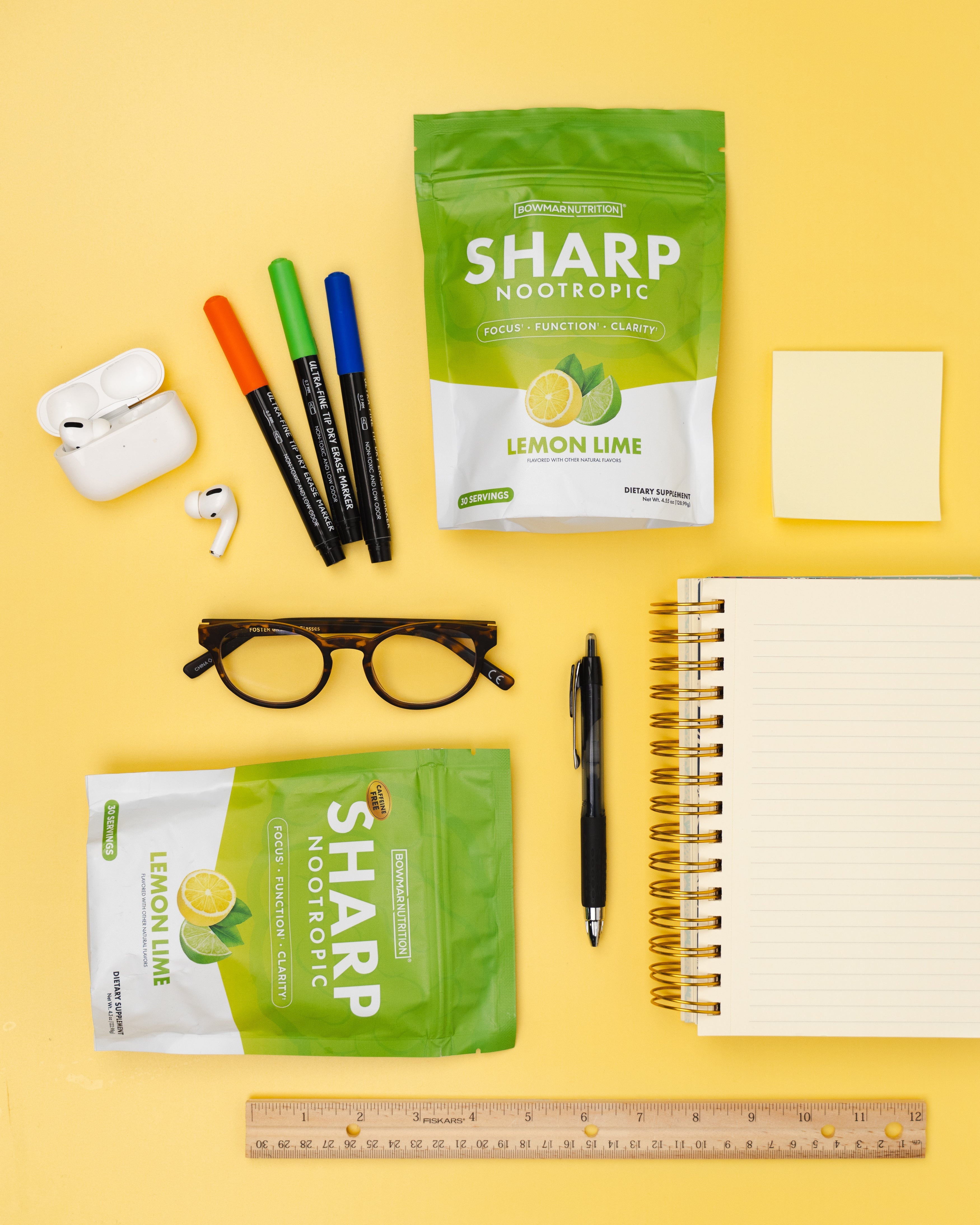
For older teens and adults who have their sleep, hydration, and meals dialed in and are looking for additional support during a demanding stretch of exams or late season training, Bowmar Sharp Nootropics ($44.99) is formulated to support mental clarity and focus, and is available in both a version with caffeine and a stim free version. This is not a starting point for a younger student or a middle school student. Food, sleep, and hydration should always come first for that age group, and any nootropic or product that contains caffeine is intended for older teens and adults only, ideally after a conversation with a parent, doctor, or athletic trainer, especially for a student who is also a competitive athlete subject to their sport's rules on supplements.
Products that contain caffeine are not recommended for children and should be used cautiously by teens, in moderation, and ideally with input from a parent or doctor. Competitive athletes should confirm any supplement is permitted under their sport's governing body rules before use. These statements have not been evaluated by the Food and Drug Administration. This product is not intended to diagnose, treat, cure, or prevent any disease.
Frequently Asked Questions
Why does my child seem so unfocused right after lunch?
A natural post meal dip in alertness affects most people to some degree, but it is often worsened by a lunch that is heavy in refined carbohydrates and light on protein, fat, and fiber, which can cause a blood sugar spike and crash right around the time afternoon classes start.
What foods actually help kids concentrate in school?
There is no single miracle food. Balanced meals with protein, complex carbohydrates, and some healthy fat support steadier blood sugar and, in turn, steadier focus, compared to meals or snacks that are mostly sugar or refined carbs eaten alone.
Is it okay for teenagers to have caffeine for focus?
Caffeine affects everyone differently, and it is not recommended for children. Older teens can generally tolerate moderate amounts, but it should be used thoughtfully, ideally with a parent's input, and avoided late in the day so it doesn't interfere with sleep, which itself is one of the biggest drivers of daytime focus.
How much does sleep really affect concentration compared to diet?
Sleep and hydration are foundational: no snack or supplement can fully compensate for a student who is chronically short on sleep or dehydrated. If focus problems persist despite good meals, sleep and hydration are usually the first things worth addressing.
Is Sharp Nootropics appropriate for a high school student?
It is formulated for older teens and adults, particularly those who already have solid sleep, hydration, and nutrition habits in place. It is not intended for younger students, and any competitive athlete should check their sport's rules and talk to a doctor before adding it to their routine.
Share:
Hydration for Two Practice Days: What Every Student Athlete's Water Bottle Needs
Building Stronger Bones and Joints: Nutrition for Growing Athletes